

If you want to improve your Google rankings and attract more targeted visitors, learning How to Do Keyword Research is an essential first step. Keyword research helps you discover what people are searching for, understand their search intent, and choose topics with real search potential.
In this beginner’s guide, you’ll learn How to Do Keyword Research step by step, from finding keyword ideas to analyzing search volume, competition, and search intent. You’ll also discover useful keyword research tools and practical tips for choosing keywords that fit your content and SEO strategy.
Table of Contents
What Is Keyword Research?
Keyword research is the process of finding and analyzing the words and phrases people type into search engines when looking for information, products, or services. It helps you understand what your target audience is searching for so you can create content that matches their needs.
Learning How to Do Keyword Research can help you choose relevant topics, understand search intent, and identify keywords with useful search potential. Instead of creating content based only on assumptions, you can use keyword data to make more informed SEO decisions.
For example, if you want to write about getting more blog traffic, keyword research can reveal related searches such as how to get more visitors to your blog, blog SEO tips, or how to increase blog traffic. You can then choose keywords that closely match your content and audience.
1. Why Keyword Research Matters for SEO
Keyword research is an important part of SEO because it helps you understand what your audience is searching for. By identifying relevant keywords, you can create content that matches search intent and answers real questions.
Learning How to Do Keyword Research can help you:
- Find relevant topics: Discover subjects your target audience is actively searching for.
- Understand search intent: Determine whether users want information, comparisons, solutions, or products.
- Target realistic keywords: Compare search volume and competition before choosing a keyword.
- Improve content optimization: Use relevant keywords naturally in your titles, headings, and content.
- Attract targeted traffic: Reach visitors who are more likely to find your content useful.
Good keyword research doesn’t mean adding keywords repeatedly. The goal is to understand your audience and create useful content that naturally addresses what they are looking for.
2. How to Do Keyword Research Step by Step
Learning How to Do Keyword Research becomes easier when you follow a clear process. The goal is to find relevant keywords, understand what people are searching for, and choose terms that fit your content strategy.
Step 1: Define Your Topic
Start with a clear topic related to your website and audience. For example, an SEO website could research topics such as keyword research, on-page SEO, or website optimization.
Step 2: Find Keyword Ideas
Enter your main topic into a keyword research tool to discover related search terms. Look for variations, specific phrases, and questions that your audience may use.
Step 3: Analyze Your Keywords
Review important metrics such as search volume, competition, and keyword difficulty. These metrics can help you compare different keyword opportunities.
Step 4: Use RankWise9 for Keyword Research
You can also use the RankWise9 Keyword Analysis service to research and analyze keywords related to your topic. It is designed to help identify the keywords users search for and find relevant opportunities for your content.
Explore RankWise9 Keyword Research
Step 5: Understand Search Intent
Determine what users want when they search for a keyword. They may be looking for information, a comparison, a product, a service, or a specific solution.
Step 6: Analyze the Competition
Search Google for your target keyword and examine the pages currently ranking. Look at their content, headings, topics, and the questions they answer.
Step 7: Choose the Right Keyword
Select a keyword that is relevant to your topic, matches search intent, and is realistic for your website to target.
Step 8: Use the Keyword Naturally
Include your chosen keyword naturally in your title, introduction, headings, URL, and relevant parts of your content. Avoid repeating it unnecessarily.
By following these steps, you can turn keyword research into a practical SEO process and create content that better matches what your audience is searching for.
3. Start With a Seed Keyword
A seed keyword is a simple word or short phrase that describes the main topic you want to write about. It provides a starting point for discovering more specific keyword ideas.
For example, if your website focuses on SEO, possible seed keywords include:
- keyword research
- SEO tools
- blog SEO
- on-page SEO
- website optimization
Once you have a seed keyword, enter it into a keyword research tool such as RankWise9 Keyword Analysis to discover related keywords and potential content topics.
For example, starting with keyword research could help you find more specific searches such as:
- how to do keyword research
- keyword research for beginners
- best keyword research tools
- how to find keywords for a blog
- keyword research for SEO
The goal is not to choose your final keyword immediately. First, use your seed keyword to build a list of relevant ideas, then analyze search volume, competition, difficulty, and search intent to find the most suitable keyword for your content.
4. Find Related Keyword Ideas
After choosing a seed keyword, the next step in learning How to Do Keyword Research is to find related keyword ideas that can help you understand what your audience is searching for. Related keywords can also help you discover additional topics and questions to cover in your content.
For example, if your seed keyword is keyword research, related ideas might include:
- how to do keyword research
- keyword research for SEO
- keyword research tools
- free keyword research tools
- keyword research for beginners
- how to find keywords for a blog
- long-tail keywords
When learning How to Do Keyword Research, consider these factors when reviewing keyword ideas:
- Relevance: Does the keyword match your topic?
- Search intent: What does the user expect to find?
- Search volume: How often is the keyword searched?
- Competition: How difficult may it be to rank?
- Specificity: Could a more specific keyword attract a targeted audience?
You don’t need to target every related keyword in one article. Choose one primary keyword and use closely related terms naturally throughout your content. This keeps your article focused and useful while covering the topic comprehensively.
5. Check Search Volume and Keyword Difficulty
When learning How to Do Keyword Research, it’s important to evaluate both search volume and keyword difficulty before choosing your target keyword. These metrics can help you understand the potential demand and level of competition.
Search Volume
Search volume estimates how often people search for a particular keyword over a given period. Keywords with higher search volume may offer more traffic potential, but they can also be more competitive.
For example, a broad keyword such as SEO may have much higher search volume than keyword research for beginners. However, the more specific keyword may better match the needs of a particular audience.
Keyword Difficulty
Keyword difficulty estimates how challenging it may be to rank for a keyword based on the competition in search results. A keyword with high difficulty usually has stronger competition, while a lower-difficulty keyword may be more accessible for newer websites.
Look at Both Metrics
Don’t choose a keyword based on search volume alone. When you learn How to Do Keyword Research, consider:
- Search volume: Is there enough interest in the topic?
- Keyword difficulty: Can your website realistically compete?
- Relevance: Does the keyword closely match your content?
- Search intent: Does your content satisfy what users are looking for?
The best keyword isn’t always the one with the highest search volume. Choose a keyword that balances relevance, search demand, competition, and search intent.
6. Understand Search Intent
Understanding search intent is an important part of learning How to Do Keyword Research. Search intent refers to the reason behind a user’s search and what they expect to find in the results.
For example, someone searching for “how to do keyword research” is looking for a guide or explanation, while someone searching for “best keyword research tools” is likely comparing different tools.
The Main Types of Search Intent
- Informational: The user wants to learn something, such as “what is keyword research?”
- Navigational: The user wants to find a specific website or page.
- Commercial: The user is researching products or services before making a decision.
- Transactional: The user is ready to take an action, such as buying a product or signing up for a service.
How to Match Search Intent
Before targeting a keyword, search for it on Google and examine the results. Look at the types of pages that rank, the questions they answer, and the format of the content.
When you understand search intent, you can create content that matches what users actually want. This can make your keyword targeting more relevant and help you avoid creating content that doesn’t satisfy the search query.
7. Analyze the Competition
Analyzing the competition is an important step in learning How to Do Keyword Research. Before targeting a keyword, examine the pages already ranking in Google to understand what you are competing against.
Check the Search Results
Search for your target keyword and review the top-ranking pages. Pay attention to:
- Content quality: Does the page provide useful and complete information?
- Content depth: How thoroughly does it cover the topic?
- Search intent: Does the content match what users are looking for?
- Titles and headings: How do competing pages structure their content?
- Freshness: When was the content published or last updated?
- User experience: Is the page easy to read, navigate, and use?
Look for Content Gaps
While analyzing competing pages, look for questions they don’t answer or information they don’t explain clearly. These gaps can help you create content that provides additional value.
You don’t need to copy what other websites are doing. Instead, use the search results to understand the topic and identify ways to make your own content more useful, accurate, and focused.
A good competitor analysis helps you choose keywords more carefully and create content that better satisfies the search intent behind those keywords.
8. Choose the Right Keywords for Your Blog
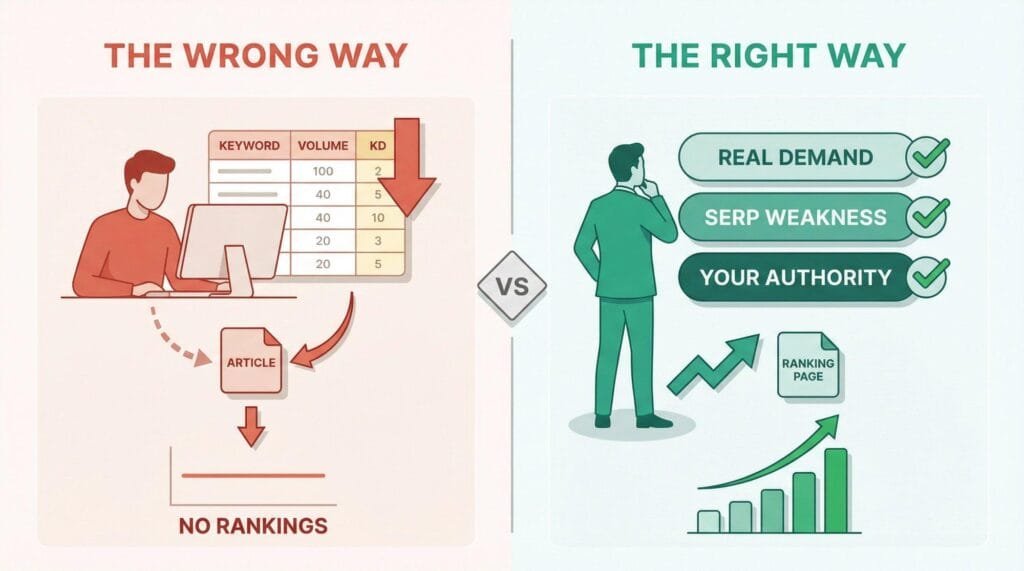
Choosing the right keywords is an important part of keyword research. Focus on keywords that are relevant to your blog, match your audience’s search intent, and have realistic competition for your website.
Start by creating a list of topics related to your blog. Then, use keyword research tools to find specific search terms people use to find information about those topics.
For a new blog, long-tail keywords can be a good starting point. These are more specific phrases that usually have a clearer search intent than broad keywords.
For example, instead of targeting “SEO,” you could target “SEO tips for beginners” or “how to improve SEO for a new blog.”
When selecting your keywords, consider:
- Relevance: Does the keyword match your content and audience?
- Search intent: Does your content answer what the searcher wants to know?
- Search volume: Are people actively searching for the keyword?
- Competition: Can your new website realistically compete for it?
- Long-tail opportunities: Can you target more specific phrases related to your main topic?
The goal is not to find the most popular keyword. It is to find the right keyword for the right audience and the right content.
9. How to Use Keywords in Your Content
Once you have chosen the right keywords, the next step is to use them naturally throughout your content. Proper keyword placement helps search engines understand what your page is about while keeping your content useful and easy to read.
Here are the main places to use your keywords:
- Title: Include your primary keyword in the page or blog post title when it fits naturally.
- Introduction: Mention your main keyword early in the introduction so readers and search engines can quickly understand the topic.
- Headings: Use your primary or related keywords in relevant H2 and H3 headings where appropriate.
- Content: Include your keywords naturally throughout the article without repeating them unnecessarily.
- URL: Keep your URL short and include the primary keyword when appropriate.
- Meta description: Write a clear description that naturally includes your main keyword and encourages users to click.
- Image alt text: Describe images accurately and use a keyword only when it genuinely describes the image.
Avoid Keyword Stuffing
Avoid adding the same keyword repeatedly just to increase keyword density. This can make your content sound unnatural and create a poor reading experience.
Instead, focus on answering your audience’s questions and use related terms, synonyms, and natural variations of your main keyword.
Example: If your primary keyword is “keyword research,” you can naturally use related phrases such as “find keywords,” “SEO keyword research,” “keyword ideas,” and “search terms.”
The goal is simple: use keywords to help explain your topic, not to write for search engines instead of your readers.
10. Best Keyword Research Tools
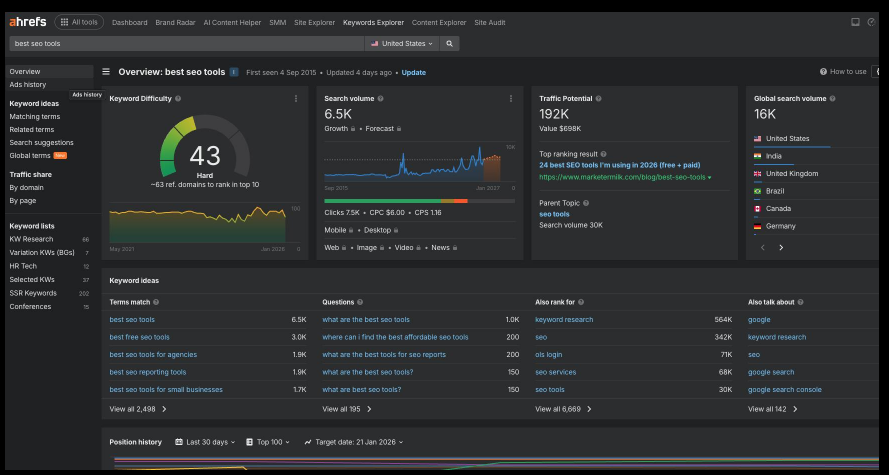
When learning How to Do Keyword Research, using the right tools can help you find relevant keywords, understand search demand, and identify opportunities for your content. Keyword research tools provide useful data such as search volume, keyword difficulty, related terms, and search trends.
Here are some popular tools you can use:
- Google Keyword Planner: Find keyword ideas and estimated search volume.
- Google Trends: Discover trending topics and compare search interest over time.
- Semrush: Research keywords, analyze competitors, and explore SEO opportunities.
- Ahrefs: Find keyword ideas and analyze search traffic, competition, and backlinks.
- SE Ranking: Research keywords, track rankings, and analyze competitors.
When learning How to Do Keyword Research, you don’t need to use every tool. Start with one or two tools that fit your goals and budget, then use the data to choose relevant keywords for your content.
11. Common Keyword Research Mistakes
Learning How to Do Keyword Research is important, but beginners often make a few common mistakes that can limit their SEO results. Avoiding these mistakes can help you choose better keywords and create more useful content.
- Choosing keywords with high competition: Popular keywords can be difficult for a new website to rank for. Start with more specific and relevant keywords.
- Ignoring search intent: Make sure your content matches what users expect to find when they search for a keyword.
- Focusing only on search volume: A keyword with high search volume is not always the best choice. Relevance and competition also matter.
- Using too many keywords: Avoid trying to target dozens of unrelated keywords in one article. Focus on one primary topic and relevant supporting terms.
- Keyword stuffing: Repeating the same keyword unnecessarily can make your content difficult to read. Use keywords naturally.
- Ignoring long-tail keywords: Specific search phrases can help you reach users with clearer search intent.
- Not updating your keyword research: Search trends and audience interests can change over time. Review your keywords and update your content when necessary.
By understanding How to Do Keyword Research correctly and avoiding these mistakes, you can build a more focused keyword strategy and create content that better matches what your audience is searching for.
12. Frequently Asked Questions
What is keyword research?
Keyword research is the process of finding and analyzing the words and phrases people use when searching for information, products, or services online. It helps you choose topics and keywords that are relevant to your target audience.
How to Do Keyword Research for beginners?
To learn How to Do Keyword Research, start by choosing a topic related to your website. Then, use keyword research tools to find relevant search terms, check search volume and competition, understand search intent, and select keywords that match your content and audience.
What are long-tail keywords?
Long-tail keywords are specific search phrases that usually contain several words. For example, “how to improve SEO for a new blog” is more specific than “SEO.” They can be useful for targeting a more specific audience and search intent.
How many keywords should I use in a blog post?
There is no fixed number of keywords you need to use. Focus on one main topic and use your primary keyword and related terms naturally throughout the content. The priority should be creating useful content that answers the reader’s search.
Which keyword research tools should beginners use?
Beginners can start with tools such as Google Keyword Planner, Google Trends, Semrush, Ahrefs, or SE Ranking. Choose tools based on your goals, budget, and the type of keyword data you need.
Why is keyword research important for SEO?
Keyword research helps you understand what your audience is searching for. This information can guide your content strategy, help you target relevant search terms, and improve your chances of attracting visitors from search engines.
13. Conclusion
Learning How to Do Keyword Research is an important step toward creating content that reaches the right audience. By understanding search intent, choosing relevant keywords, focusing on realistic opportunities, and using the right keyword research tools, you can build a stronger SEO strategy.
You don’t need to find hundreds of keywords to get started. Focus on a few relevant keywords that match your audience’s needs and create useful, well-structured content around them. As your website grows, continue reviewing your keywords, tracking your results, and updating your content to find new opportunities.
Start with one topic, find the right keywords, and turn your research into helpful content your audience wants to read.